

Technology
Artificial Intelligence and the Future of Work in Africa
Jospong Group
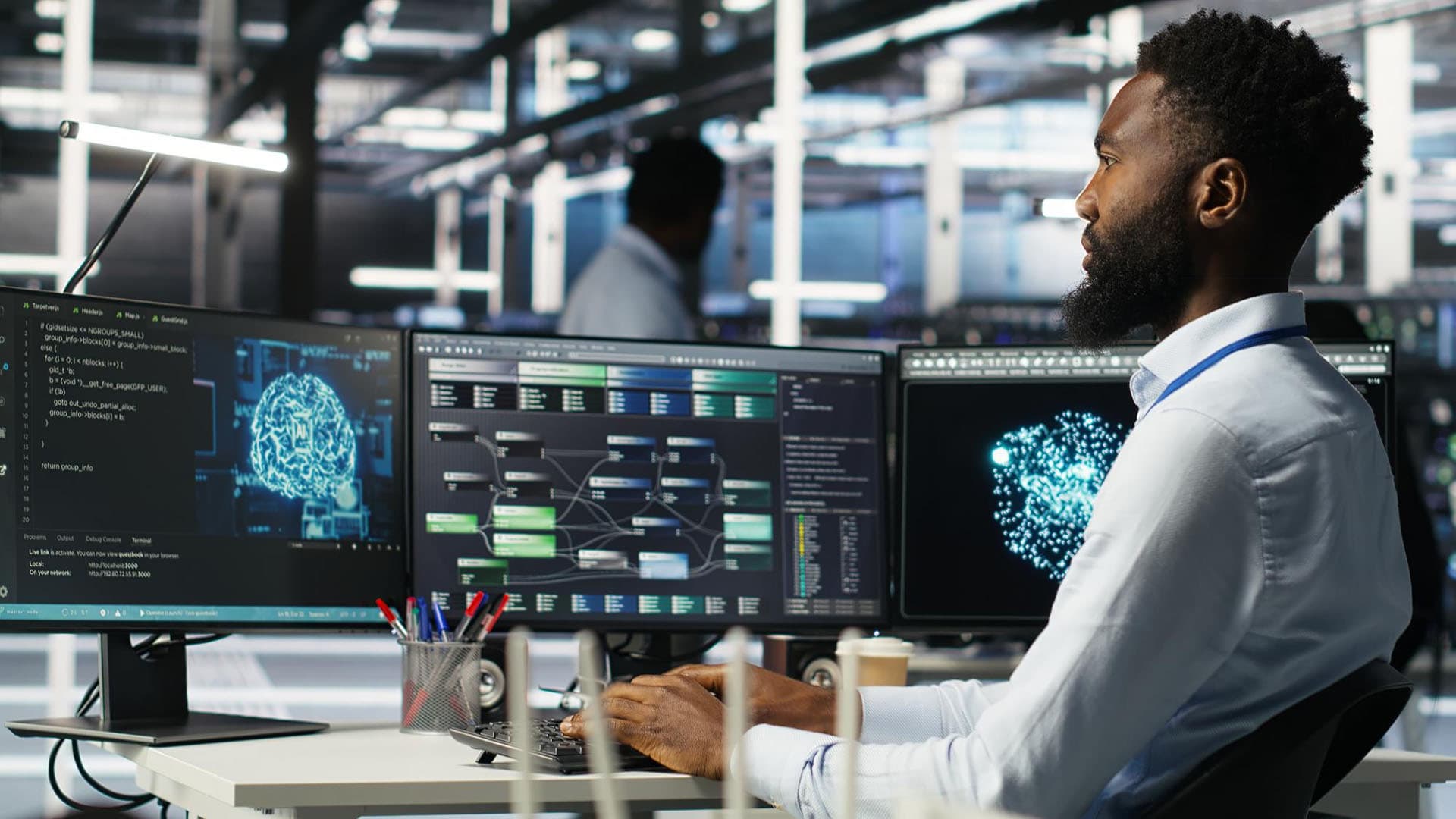
Artificial intelligence is moving from the technology sector into everyday business.
Businesses are exploring AI for customer service, data analysis, content development, forecasting, automation and other activities. At the same time, employees are learning how to work alongside increasingly capable digital tools.
For Africa, this technological shift presents an important opportunity: building a workforce that can use AI responsibly and productively while creating new forms of employment and enterprise.
Understanding Artificial Intelligence
Artificial intelligence refers broadly to computer systems capable of performing tasks that traditionally require aspects of human intelligence.
These can include recognising patterns, processing information, generating content, answering questions and making predictions based on data.
AI is not one single technology.
It includes a growing range of tools and applications, from machine-learning systems to generative AI platforms.
For businesses, the important question is not simply whether AI exists.
It is where AI can create useful and measurable value.
How AI Can Support Businesses
One of AI's most important applications is helping people work with information.
Businesses generate large volumes of data and documents. AI can help organise, summarise and analyse information, allowing employees to spend more time on decision-making and higher-value activities.
AI can also support customer-service operations, identify patterns in business data, assist with forecasting and automate selected repetitive tasks.
The value depends on how the technology is implemented.
A poorly designed AI application can create new problems. A carefully designed application can help employees work more efficiently.
AI Does Not Eliminate the Need for People
Discussions about AI often focus on whether machines will replace workers.
The more immediate issue for many organisations is likely to be how work itself will change.
Employees may increasingly work alongside AI tools.
A customer-service professional may use AI to retrieve information.
A manager may use AI to analyse data.
A communications team may use AI to develop initial drafts.
An analyst may use AI to identify patterns that require further investigation.
In each case, human judgement remains important.
People must decide whether the information is accurate, appropriate and relevant.
The Importance of Digital Skills
As AI becomes more common, employees will need a broader range of digital skills.
These skills do not necessarily mean becoming an AI engineer.
Workers across different professions may need to understand how to use AI tools, evaluate their outputs and recognise their limitations.
They may also need stronger skills in data literacy, cybersecurity, critical thinking and digital communication.
This makes continuous learning increasingly important.
Preparing Employees for Change
Jospong Group's approach to workforce development provides an example of how organisations can support continuous learning.
Through the Jospong Academy's Talent Learning Management System, employees can access more than 300 courses covering areas such as digital transformation, data analysis, cybersecurity, business innovation, entrepreneurship and leadership.
This type of learning infrastructure becomes increasingly valuable as technology changes.
Rather than preparing employees for one specific technology, organisations can develop a culture in which employees continuously update their capabilities.
AI and Africa's Young Workforce
Africa's youthful population creates a significant opportunity.
Young people entering the workforce today are likely to encounter technologies that did not exist when previous generations began their careers.
This means education and employment systems need to place greater emphasis on adaptability.
Digital skills should complement traditional professional and technical skills.
A logistics professional may need data skills.
A marketer may need to understand AI-assisted content tools.
An accountant may work with increasingly automated financial systems.
An engineer may interact with AI-supported design and analysis tools.
The future workforce will therefore be increasingly multidisciplinary.
Responsible Use Matters
AI also creates important responsibilities.
Businesses need to think about privacy, cybersecurity, accuracy, intellectual property and bias.
AI-generated information should not automatically be treated as correct.
Employees need to understand when human verification is required.
Organisations also need appropriate governance frameworks to determine which AI applications are acceptable and how sensitive information should be handled.
Trust will be an important part of successful AI adoption.
AI and Entrepreneurship
AI is not only relevant to established businesses.
It can also lower barriers for entrepreneurs.
Small businesses can use digital tools to support marketing, customer communication, research, administration and productivity.
This can allow small teams to perform activities that previously required larger resources.
The opportunity is particularly relevant in Africa, where entrepreneurship plays an important role in employment and economic development.
However, access to technology must be accompanied by access to skills, reliable connectivity and appropriate digital infrastructure.
What Businesses Should Do Now
Businesses do not need to adopt every AI application immediately.
A more practical approach is to identify specific challenges where AI may provide value.
Organisations can begin with controlled applications, measure results and learn from experience.
They can also invest in employee training and establish clear rules around responsible use.
The objective should be sustainable adoption rather than technology for its own sake.
The Future of Work Is Human and Digital
The future workplace will likely involve closer interaction between people and technology.
AI can process information at scale.
People bring judgement, creativity, empathy, accountability and contextual understanding.
The challenge is to combine these strengths effectively.
For African businesses, this means preparing employees not simply to use today's technologies but to continue learning as new technologies emerge.
The organisations that invest in both technology and people will be better equipped to navigate an increasingly digital economy.
Technology Takeaway: AI is changing the way work is performed, but people remain central. Africa's opportunity lies in combining emerging technologies with skills development, responsible governance and human creativity.